The Half-Finished Masterpiece Is Your Loudest Statement

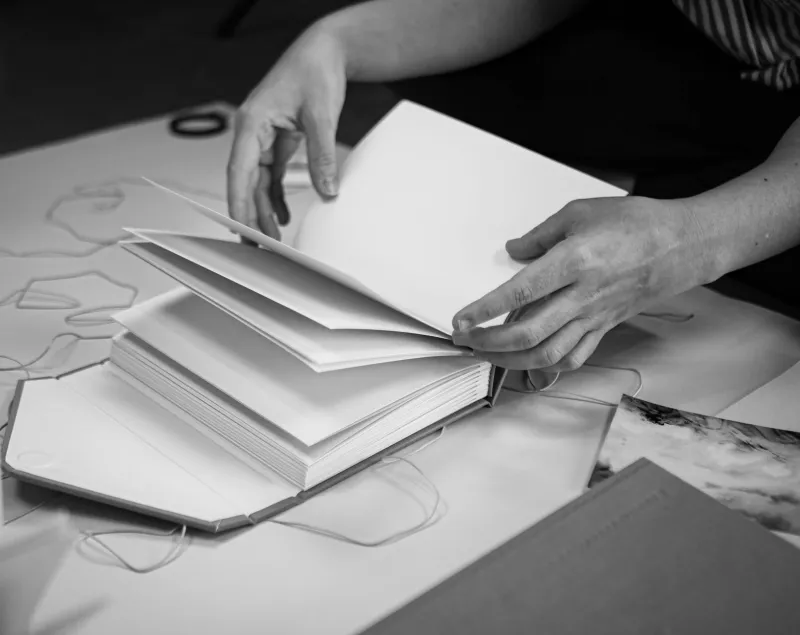
Photo by Photo by Antonio Francisco on Unsplash on Unsplash
Here's something nobody tells you when you're starting out: the projects you never finished might be doing more for your brand right now than the ones you actually shipped.
Wild, right? But stay with me.
We've been conditioned — by Instagram aesthetics, by LinkedIn hustle culture, by every "overnight success" story that conveniently skips the three years of chaos before the breakthrough — to believe that only the polished, finished, wrapped-in-a-bow version of your work deserves to be seen. The rest? Shove it in a folder. Hide it. Pretend it doesn't exist.
But that instinct is costing you something real. It's costing you connection.
Why the Finish Line Isn't the Whole Story
Think about the last time you felt genuinely close to a creator, an entrepreneur, or an artist you follow online. Chances are, it wasn't because of their most polished post. It was because of the video where they almost cried talking about a project that flopped. It was the behind-the-scenes clip where everything was clearly going sideways. It was the thread where they admitted they'd restarted the same idea four times and still didn't have it figured out.
That's the stuff that sticks. Because it's true.
Polished content communicates competence. Messy, in-progress content communicates humanity. And in an era where audiences are drowning in competence, humanity is the scarcest resource in the room.
The phoenix doesn't just rise from the ashes looking perfect. It burns first. Visibly. Loudly. That's the whole mythology — the transformation is the point, not just the arrival.
The Psychology Behind Why Imperfection Connects
There's actual research backing this up. Psychologists call it the Pratfall Effect: people tend to like and trust someone more after they witness that person make a mistake or show vulnerability — as long as they already perceive that person as generally capable. Showing your unfinished work, your failed experiments, your creative dead ends? That's the Pratfall Effect in action.
When you share the half-built version of a project, you're signaling a few things at once:
- You're still in motion. You're not waiting for perfect conditions before you start. That's rare and people respect it.
- You're not performing. Curated feeds are everywhere. Someone who shows the rough draft is someone who's actually doing the work, not just documenting the win.
- You trust your audience. Inviting people into the process is an act of respect. It says: I think you're mature enough to handle the reality of how this actually works.
That trust? It comes back to you tenfold.
What "Sharing the Mess" Actually Looks Like
Let's get practical, because "be vulnerable" is advice that sounds good and means nothing without some structure behind it.
Sharing your unfinished work doesn't mean oversharing every spiral, every self-doubt, every 2 a.m. crisis text you almost sent. It means being intentional about documenting process as a form of content.
The Progress Update. You're working on something — a mixtape, a business rebrand, a new service offering, a creative project you can't quite name yet. Post an update. Not the finished thing, just where you are right now. "Three months in, totally changed the direction, here's why." That's a story. People will follow that story.
The Honest Post-Mortem. Something didn't pan out? Write about it. Not a self-flagellating breakdown, but a clear-eyed "here's what I tried, here's what didn't work, here's what I learned." This kind of content has an incredibly long shelf life because people are constantly searching for "why did X fail" and "what went wrong with Y." You become a resource and a real person simultaneously.
The Pivot Announcement. You started building one thing and it turned into something else entirely. Document that pivot. Talk about what you thought you were making and what you're actually making now. Pivots are compelling because they're honest proof that you're listening — to your audience, to the market, to your own gut.
The Unfinished Mood Board. Visual creators, this one's for you. Post the inspiration collage, the color palette you're obsessing over, the references you're pulling from before you've made a single finished piece. Let people see the before before there's an after.
The Fear That Keeps You Hiding the Draft
Most people don't share their unfinished work because they're afraid it'll make them look like they don't have it together. And look — that fear makes complete sense. We've been trained to perform competence, especially in professional contexts.
But here's the reframe: in a creative industry, showing that you're perpetually in-process isn't a weakness. It's the whole brand. It communicates that you're someone who always has something cooking. That you're not a one-hit wonder waiting for inspiration to strike once every two years. That your creative identity isn't a single project — it's a practice.
The artists and creators who've built the most loyal audiences in the last decade aren't the ones who disappeared for three years and came back with something perfect. They're the ones who brought their audience along for the whole ride — the experiments, the failures, the pivots, the slow burns.
Your unfinished projects aren't a liability. They're evidence of a creative life actually being lived.
Turning Your Process Into Your Platform
If you're going to lean into this, make it intentional. Don't just randomly dump half-baked content and call it vulnerability. Build a rhythm around it.
Decide on a cadence — maybe once a month, you give people a "state of the work" update. Maybe you create a dedicated series around a project you're building in public. Maybe you commit to one honest post-mortem every quarter about something that didn't go the way you planned.
The key is framing. You're not posting unfinished work because you ran out of finished things to share. You're posting it because you believe the process is as valuable as the product. That distinction matters — for how your audience receives it, and for how you feel about sharing it.
Every version of you that's ever existed — the one who started a project and abandoned it, the one who shipped something imperfect, the one who tried a direction that led nowhere — that's not a trail of failures. That's a trail of proof. Proof that you keep showing up. Proof that you're willing to be wrong on the way to being right.
That's not something to hide.
That's the whole story.